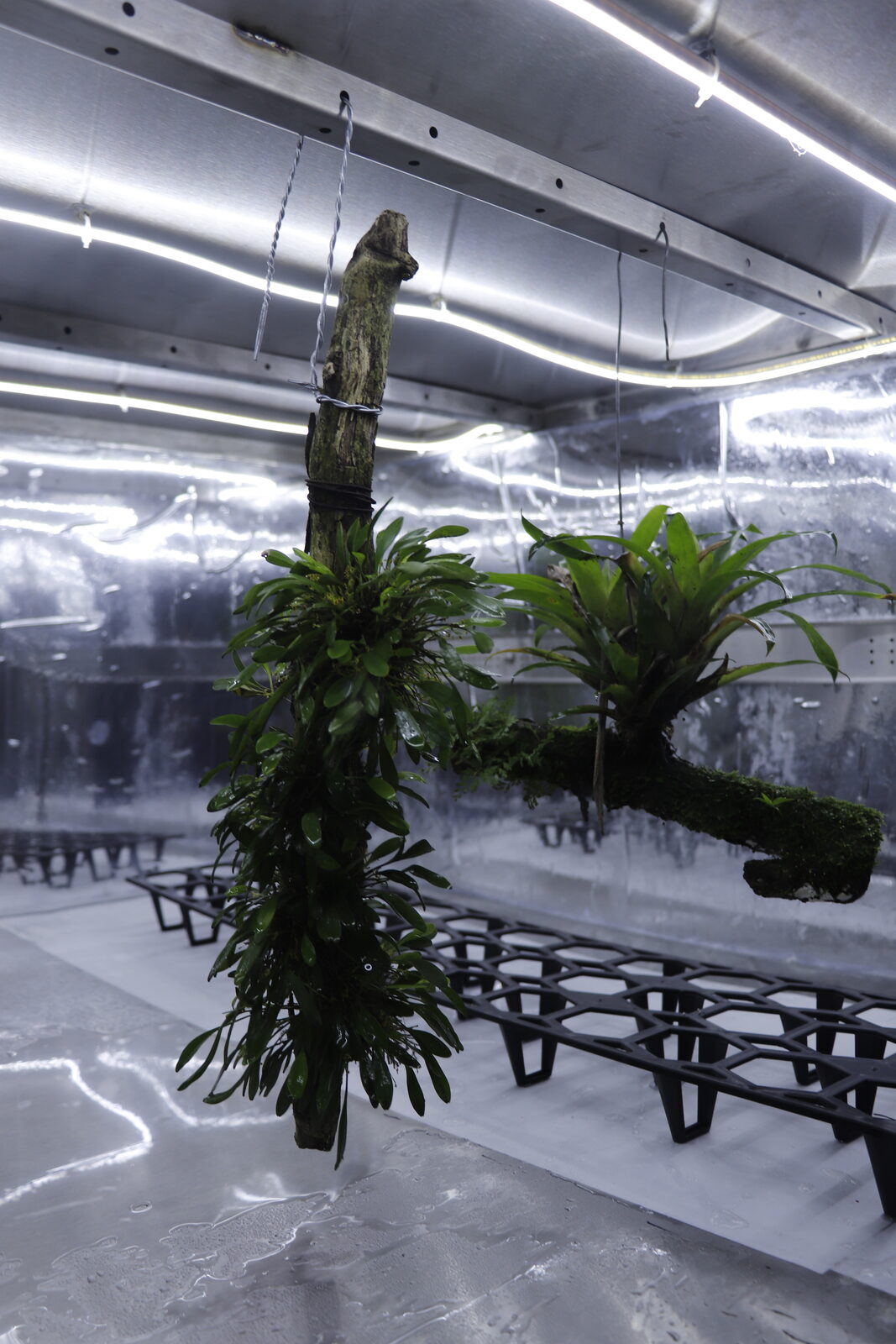
The biggest bottleneck in laboratory-based orchid conservation is not germination — it is survival in the open air. The RAR Climate Replicator exists to soften that transition.
It is a modular, automated greenhouse system that reproduces the temperature, humidity, airflow and water regimes of natural orchid habitats, rather than the homogenised conditions of a standard nursery. The habitat-replication work began as a cultivation tool and now sits as research infrastructure: a controlled environment for acclimatisation, experimental cultivation and conservation support.
What it does
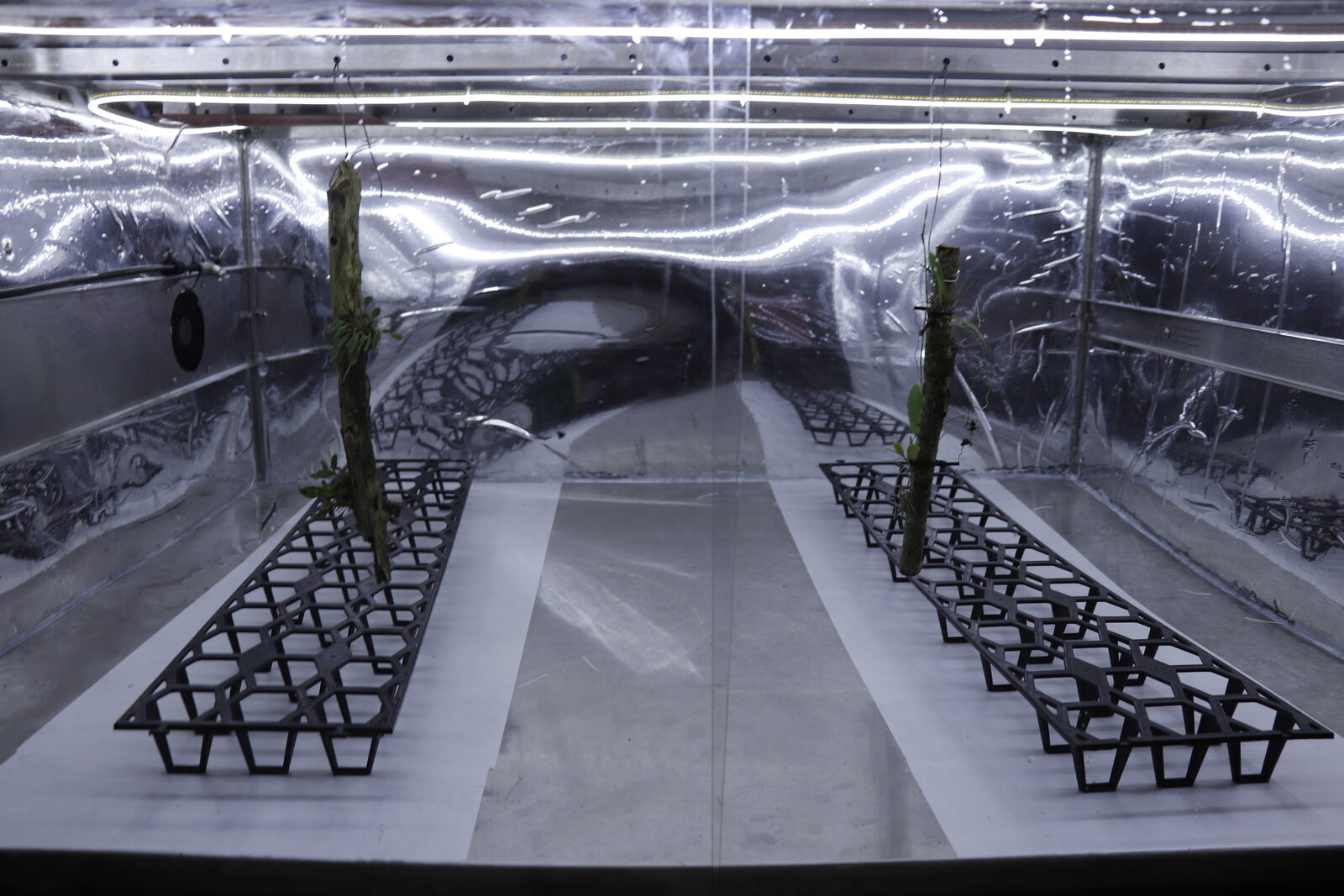
At its core, the system is a controlled micro-greenhouse — but one designed specifically to reproduce the environmental conditions of natural orchid habitats. It integrates sensors, programmable climate control, LED lighting, automated watering and remote monitoring into a single chamber.
- Climate control. Precise regulation of temperature, humidity and airflow, matched to target habitats.
- Lighting simulation. Programmable LEDs reproduce natural light cycles — sunrise, daylight and sunset transitions included.
- Automated watering. Pumps and valves run on scheduled, sensor-triggered or habitat-specific programmes.
- Habitat replication. Configurable for cloud-forest microclimates, flowing-water habitats or limestone seepage systems.
- Remote monitoring. The chamber transmits data to a server for real-time monitoring and remote control.
Why it matters for conservation
The hardest moment in laboratory-based orchid conservation is deflasking — when an in-vitro seedling leaves its sterile flask and has to survive in the open air. Mortality at this stage routinely exceeds 50%, and is often much higher.
The RAR Climate Replicator gives us a gradient. The seedling moves from sterile flask, through a controlled chamber that reproduces its home habitat, before facing the full variability of the open greenhouse or the wild. It turns an abrupt cliff-edge into a managed transition between in-vitro propagation, acclimatisation and later ex-situ or field establishment.
The core conservation use. The chamber bridges the gap between sterile culture and living habitat — the single stage where most laboratory-raised orchids are lost.
An experimental microcosm
The chamber also lets us ask questions we cannot ask in the field. What happens to Cypripedium seedlings under simulated climate projections for 2050? What humidity regime is actually lethal for Prosthechea vitellina? Because every variable is logged and controllable, the replicator becomes a small, repeatable experimental microcosm for habitat-sensitivity work.
Current versions
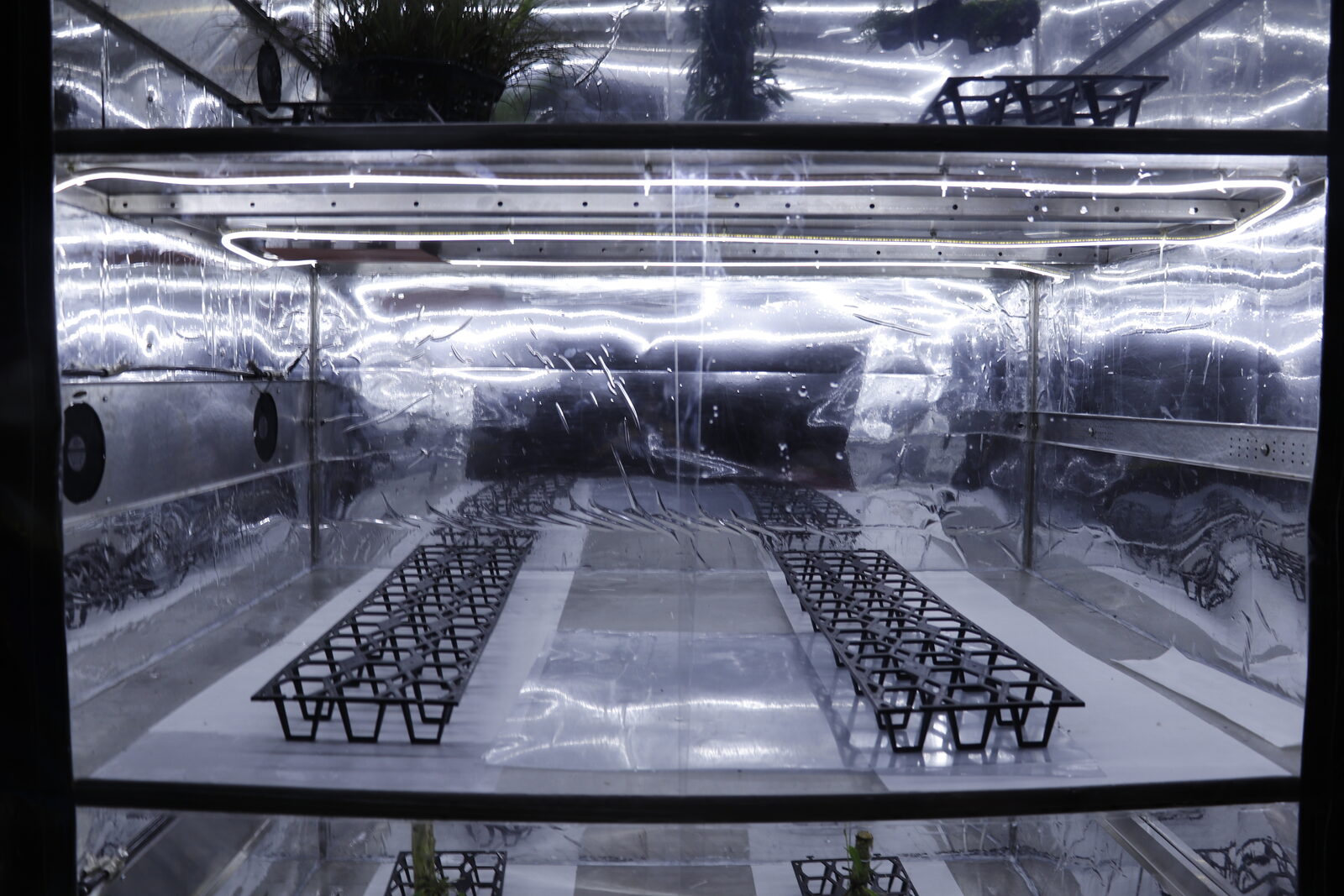
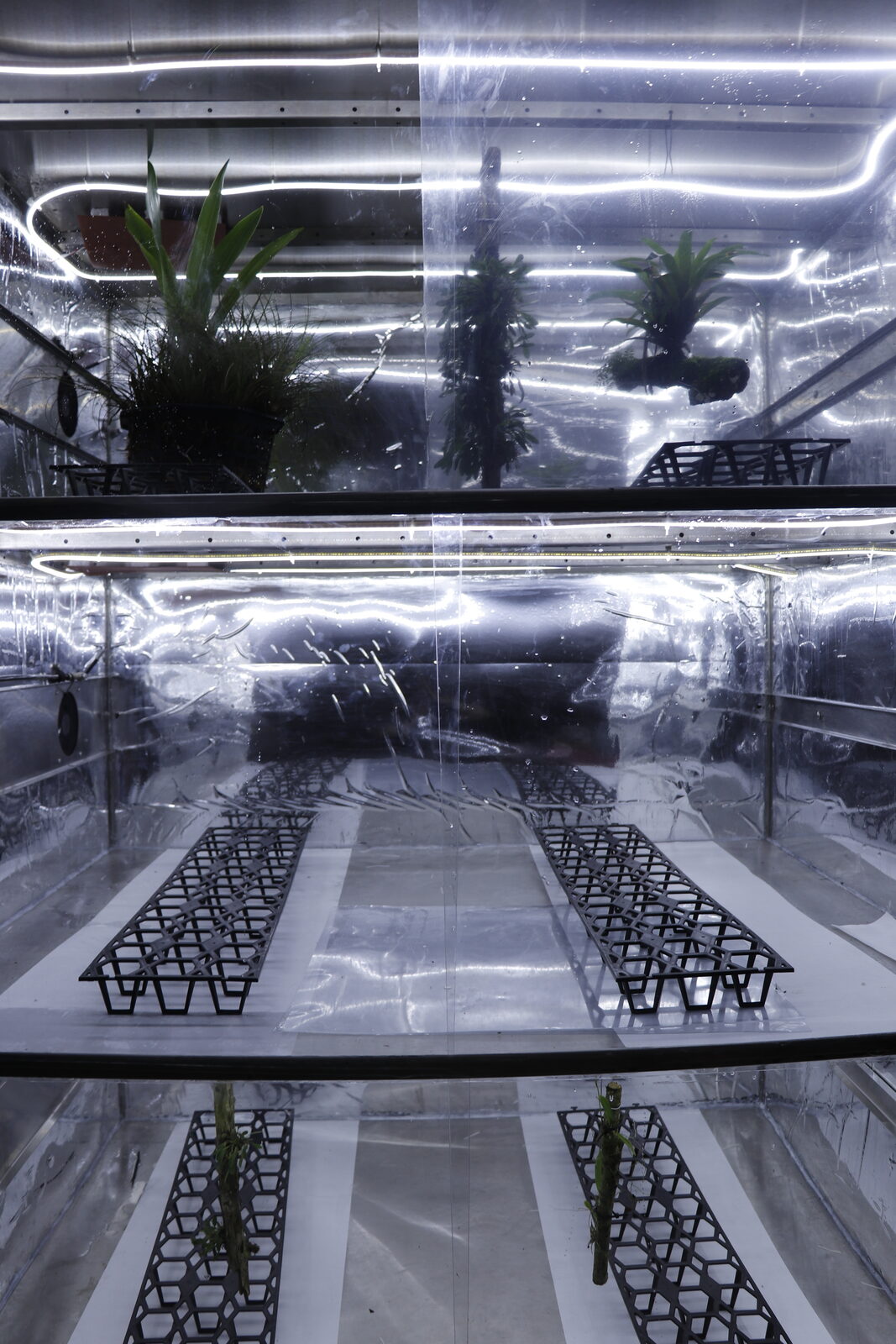
Several configurations are in development, each tuned to a different habitat type:
For rheophytic species adapted to flowing-water habitats and constant moisture.
For Cypripedium mycorrhizal co-culture and terrestrial establishment.
For cloud-forest epiphytes that depend on near-saturated air and frequent misting.
Where it sits in the programme
Within Orchidarc, the Climate Replicator is the infrastructure layer beneath the field and laboratory work: the species we document in the wild are the species we acclimatise and study here. It connects the conservation programme directly to experimental cultivation, and is being prepared for presentation at the Encuentro Mexicano de Orquideología in November 2026.
Research themes
- Reducing deflasking mortality through staged acclimatisation.
- Habitat-specific climate programmes for cloud-forest, rheophytic and seepage species.
- Simulated future-climate stress testing of threatened orchids.
- Sensor logging and remote monitoring for repeatable cultivation experiments.