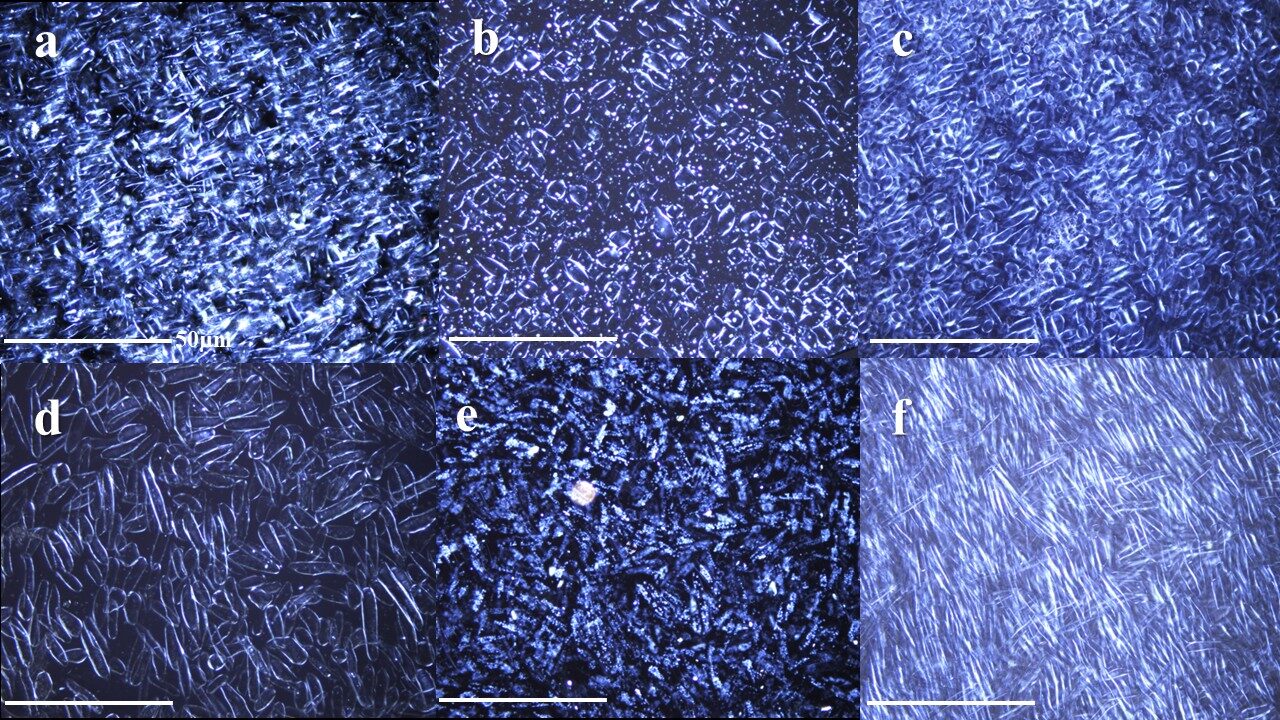
Orchid stigmatic secretions are usually described as viscous fluids or mucilage. This research reframes them as soft, adhesive biocomposites: hydrated extracellular matrices containing detached living cells.
The project asks whether orchid stigmatic secretions behave as simple liquids, weak gels, yielding liquids or viscoelastic adhesive materials under pollination-relevant timescales.
Why the stigma is a materials problem
Pollination does not end when a pollinarium attaches to an insect. The pollinarium must later be pressed into the stigma of another flower, retained as the pollinator departs, and kept in contact long enough for pollen hydration, germination and pollen-tube growth.
This means the stigmatic material must satisfy two opposing mechanical requirements: it should be compliant enough to accept insertion, but resistant enough to prevent immediate removal. That behaviour cannot be inferred from anatomy or chemistry alone. It requires rheology.
What we measured
The study combines oscillatory shear rheology, creep-recovery testing, polarised-light microscopy, gravimetric water-content measurement and qualitative phytochemical screening. Rheology focused on five epidendroid genera: Cattleya, Laelia, Dendrobium, Cymbidium and Phalaenopsis. Microscopy was extended to nine genera.
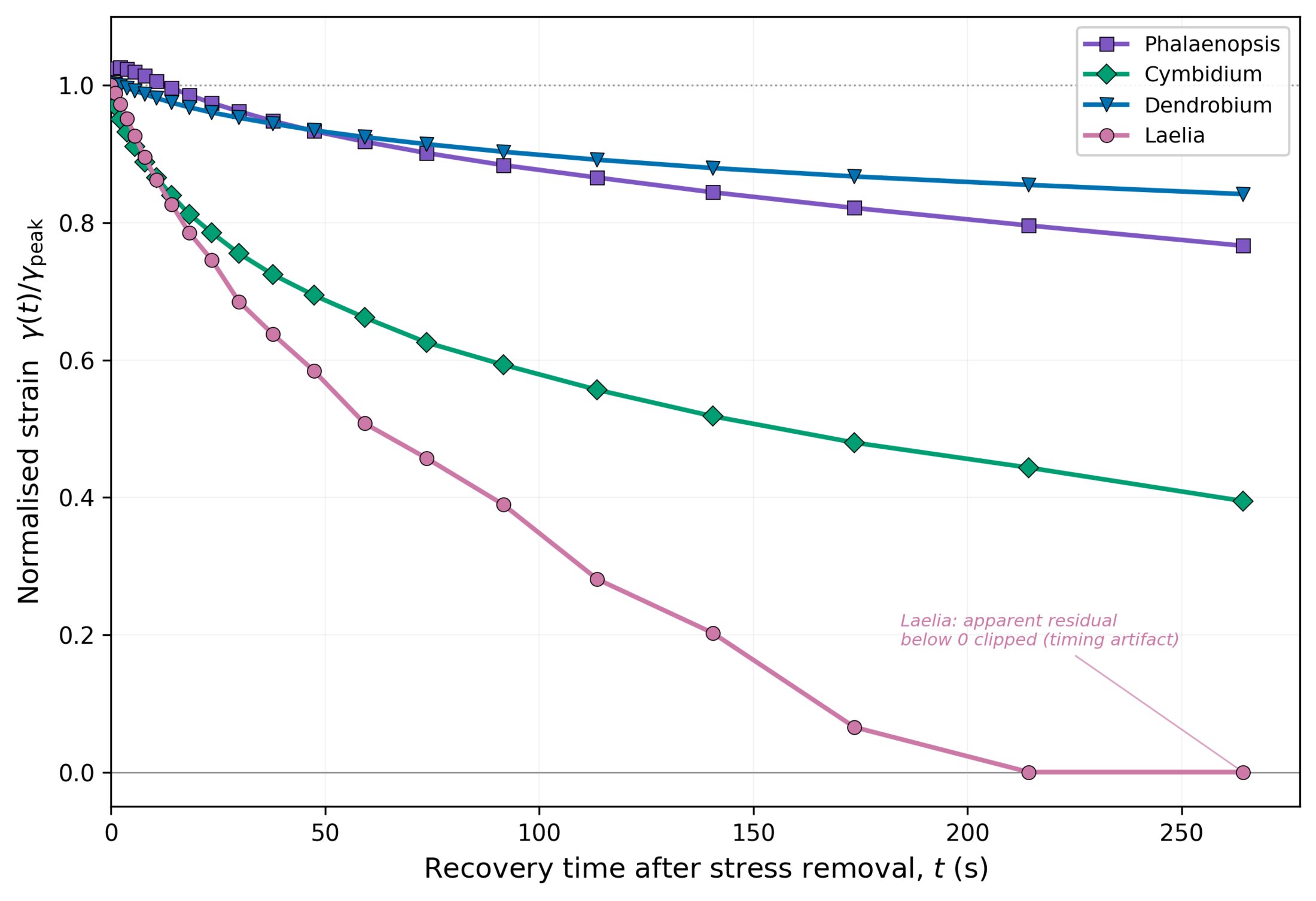
Amplitude sweeps, frequency sweeps and creep-recovery tests measured stiffness, relaxation and irreversible flow.
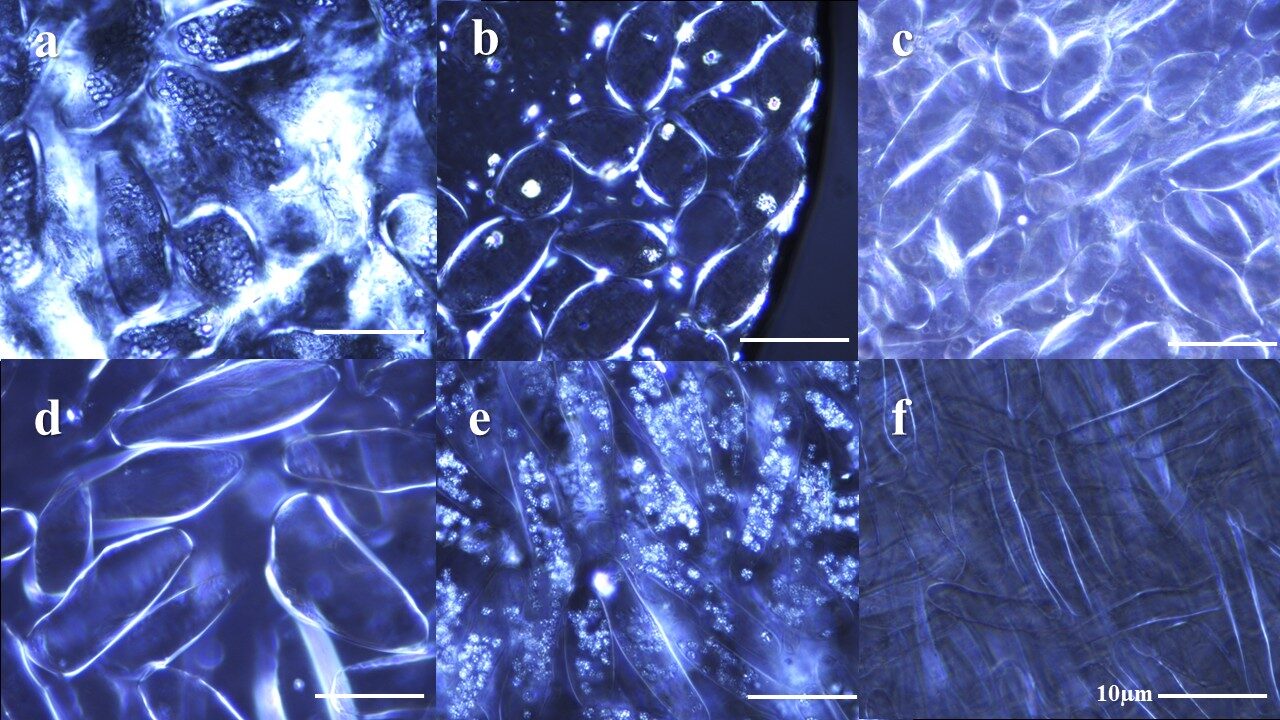
Polarised-light imaging revealed detached cells suspended in a continuous extracellular matrix.
Water-content, phytochemical screening, SEM and TGA gave broad compositional support.
A solid-to-liquid spectrum
All rheologically tested samples showed measurable linear viscoelastic ranges. Plateau storage moduli spanned more than two orders of magnitude, from approximately 4 kPa in Dendrobium to 679 kPa in Cattleya. This places the sampled materials along a viscoelastic solid-to-liquid spectrum rather than among simple viscous fluids.
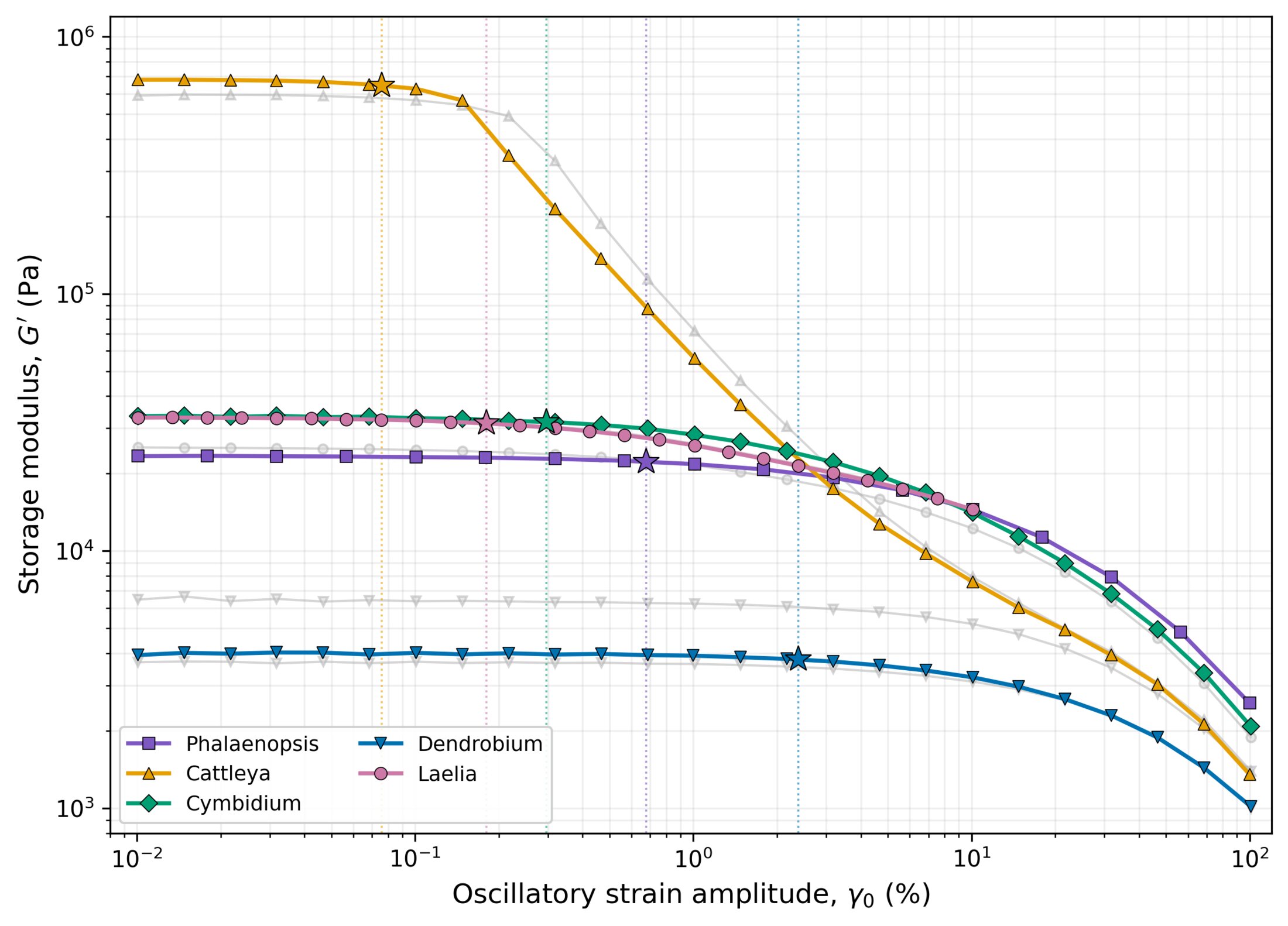
Cattleya behaved as the most solid-like material under the tested conditions, with no detected crossover between storage and loss moduli. Dendrobium was the most liquid-like, with loss-dominated behaviour across much of the measured range. Laelia, Phalaenopsis and Cymbidium occupied intermediate positions.
Core conclusion. The orchid stigmatic secretion is mechanically structured. It stores elastic stress, dissipates energy and changes behaviour with deformation rate.
Rate-dependent adhesion
The frequency-sweep data suggest a functional asymmetry relevant to pollination. At slower deposition-like rates, several genera are compliant enough to satisfy the Dahlquist criterion for soft adhesive contact. At faster withdrawal-like rates, the materials stiffen substantially.
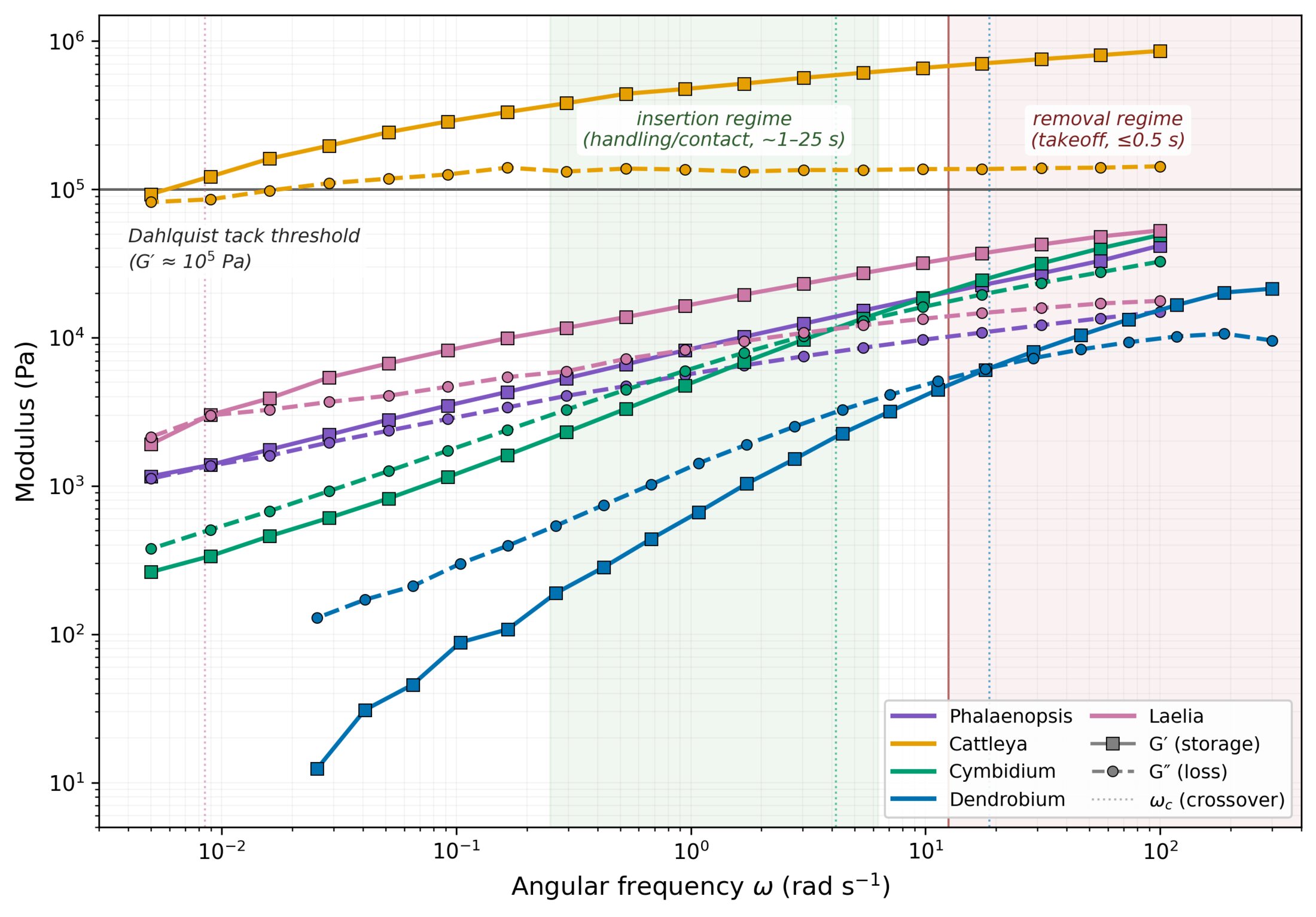
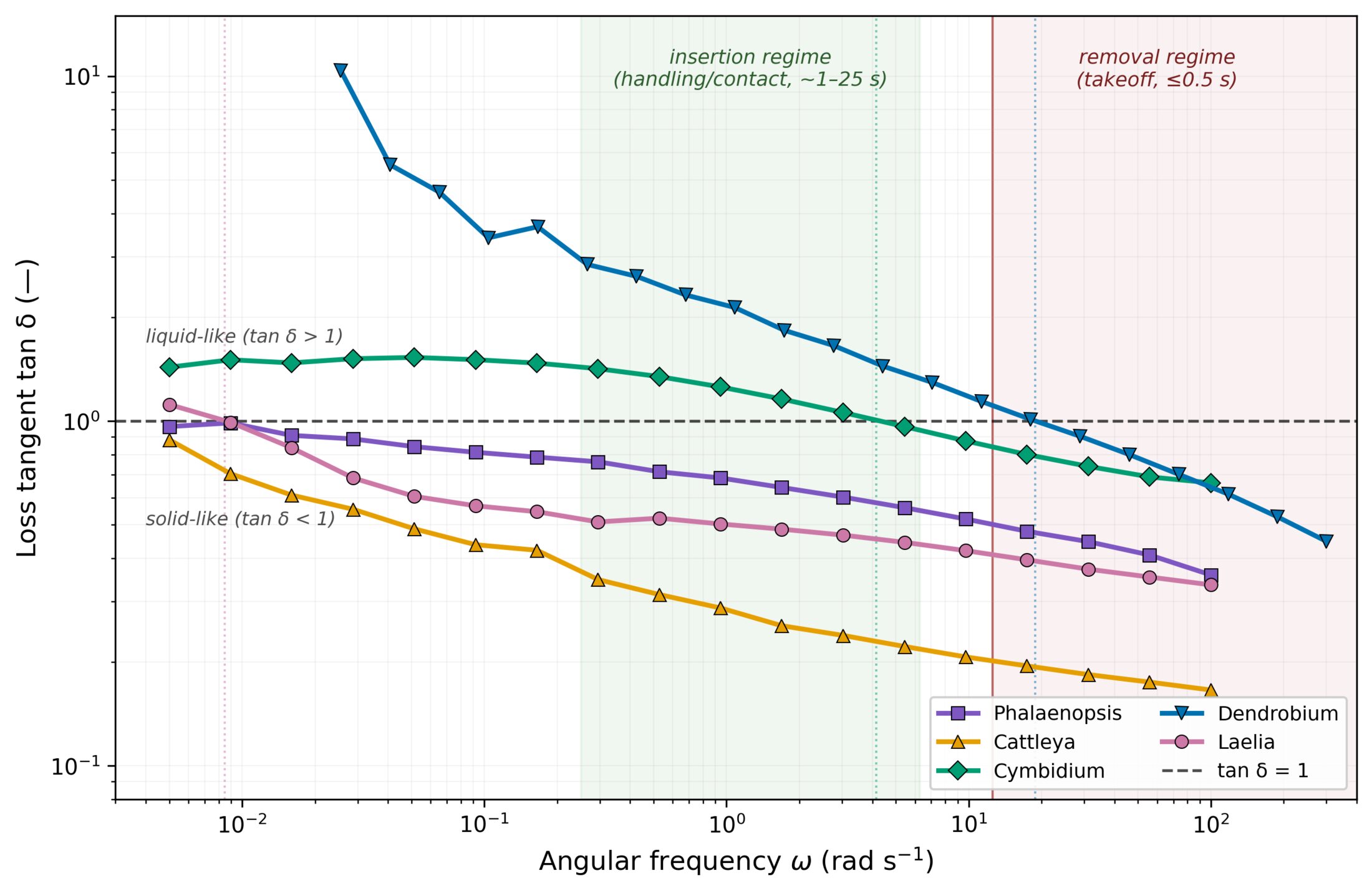
This generates a testable mechanical prediction: the stigma may be soft during slow pollinarium insertion but resistant during rapid pollinator departure. In other words, the material may act as a rate-dependent soft adhesive.
This remains a prediction, not a completed claim. The next experimental step is to measure pollinarium withdrawal forces across controlled loading rates and relate them directly to rheological behaviour.
Eleutherocytes: cells inside the gel
Microscopy revealed detached cells, called eleutherocytes, embedded within a continuous extracellular matrix in every sampled genus. This extends a WDc-like organisation beyond its classical description in Dendrobium.
The study observed this architecture in Cymbidium, Dendrobium, Oncidium, Cattleya, Laelia, Coelogyne, Phalaenopsis, Vanda and Masdevallia. For several of these genera, this is likely the first report of detached stigmatic cells in this material context.
Cell shapes varied from spheroid to fusiform to filamentous. Some cells contained refractile granules or visible vacuolar structures; others appeared optically clear. This diversity suggests that the cells may have biological roles in secretion, recognition or pollen-tube support, but current data do not show that they mechanically reinforce the gel.
Why “composite” is the better word
The term “stigmatic fluid” hides the most important findings. These materials are not homogeneous fluids: they are hydrated matrices containing a cellular phase and showing measurable viscoelastic structure.
“Stigmatic composite” is therefore a more accurate working term. It captures both the biphasic architecture and the fact that these materials can store elastic stress over biologically relevant timescales.
Hydration is not enough
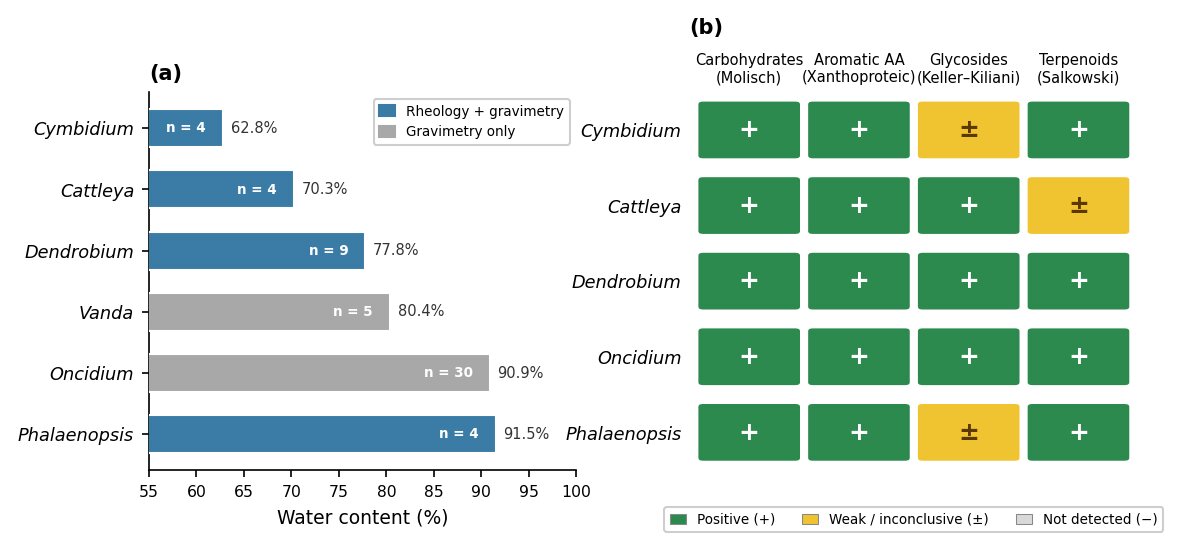
Water content varied widely, but did not explain stiffness. Cattleya, the stiffest sampled material, had intermediate water content. Phalaenopsis, the most hydrated overall, retained intermediate stiffness. This implies that matrix composition, polymer chemistry, cross-link topology and hydration structure are more important than water content alone.
Qualitative phytochemical screening found carbohydrates and aromatic-amino-acid-bearing proteins across the tested genera, supporting a shared polysaccharide-protein compositional core with genus-level variation.
Why this matters for biomaterials
The stigmatic composite is a natural soft material that combines adhesion, hydration, cellular inclusion and rate-dependent mechanical behaviour. It may offer design principles for hydrated adhesives, biological scaffolds and plant-derived soft composites.
For Orchidarc, this research also expands conservation value: orchid diversity is not only visual or ecological. It contains unexplored materials, structures and biological design strategies that can only be studied if the species and habitats persist.
Current limitations
The work remains cautious. Samples were pooled from multiple flowers, residual dehydration was reduced but not eliminated, wall slip was not explicitly tested, and microscopy-based cell fraction is only a two-dimensional projection. The results establish a framework, not a final constitutive model.
The next phase will connect rheology directly to pollination mechanics by measuring insertion and withdrawal forces in the intact flower.
Manuscript
Soft, Adhesive Matrix-Cell Bio-Composites from Orchid Stigma. Andres E. Ramos R., Tetsuo Yamaguchi, Yuliana Valdiviezo Cuenca, Paula Yanez Contreras, David Cuenca Fernández and Frank Alexis. Manuscript in development.
Research themes
- Rheology of orchid stigmatic secretions.
- Weak-gel and yielding-liquid behaviour in plant reproductive materials.
- Eleutherocyte-containing matrix-cell composites.
- Rate-dependent adhesion during pollinarium capture and retention.
- Hydrated biological matrices as models for soft biomaterials.