
Acineta barkeri
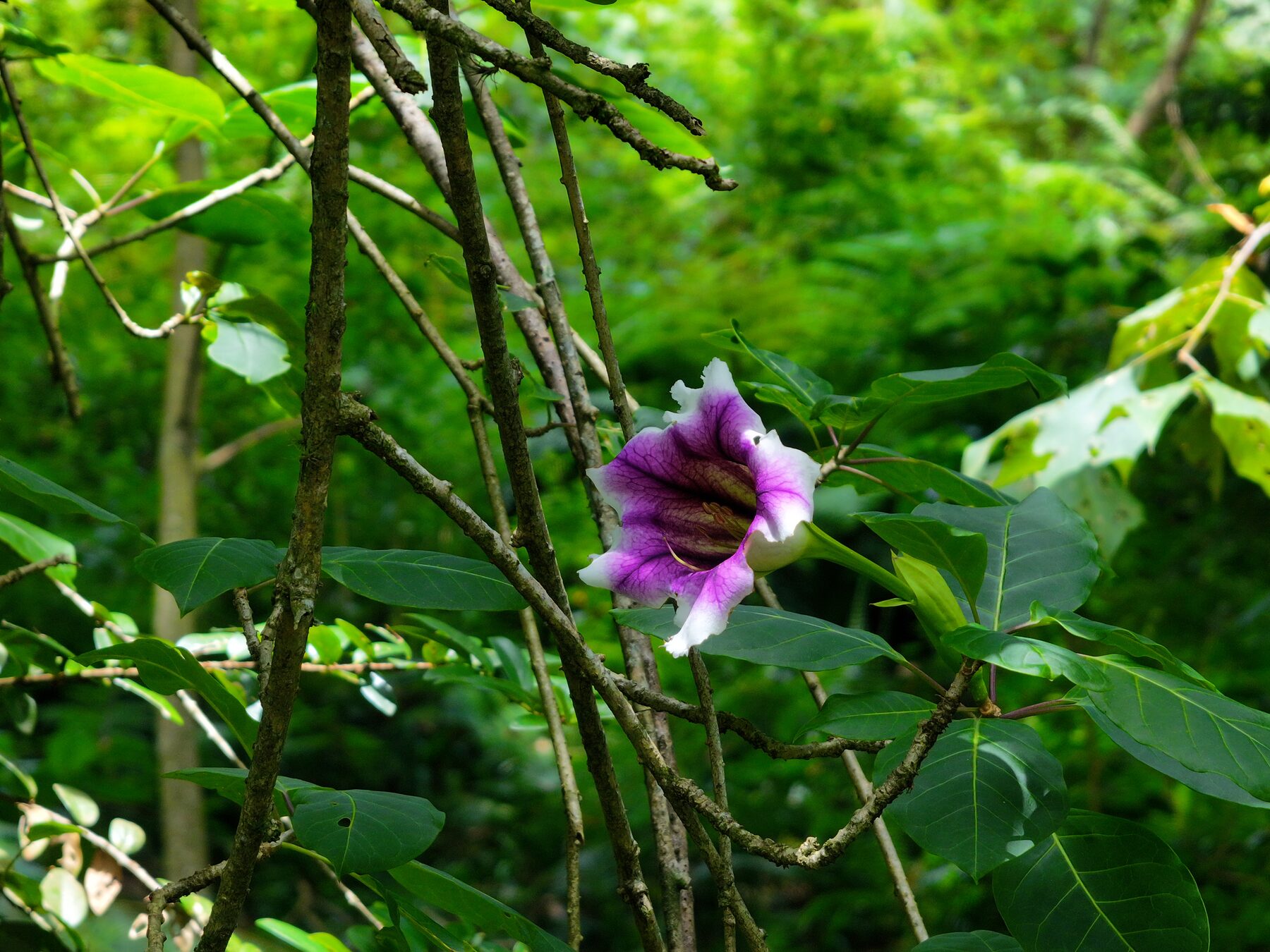
A threatened cloud-forest orchid monitored in situ at the reserve, with mature individuals growing in the remaining canopy.
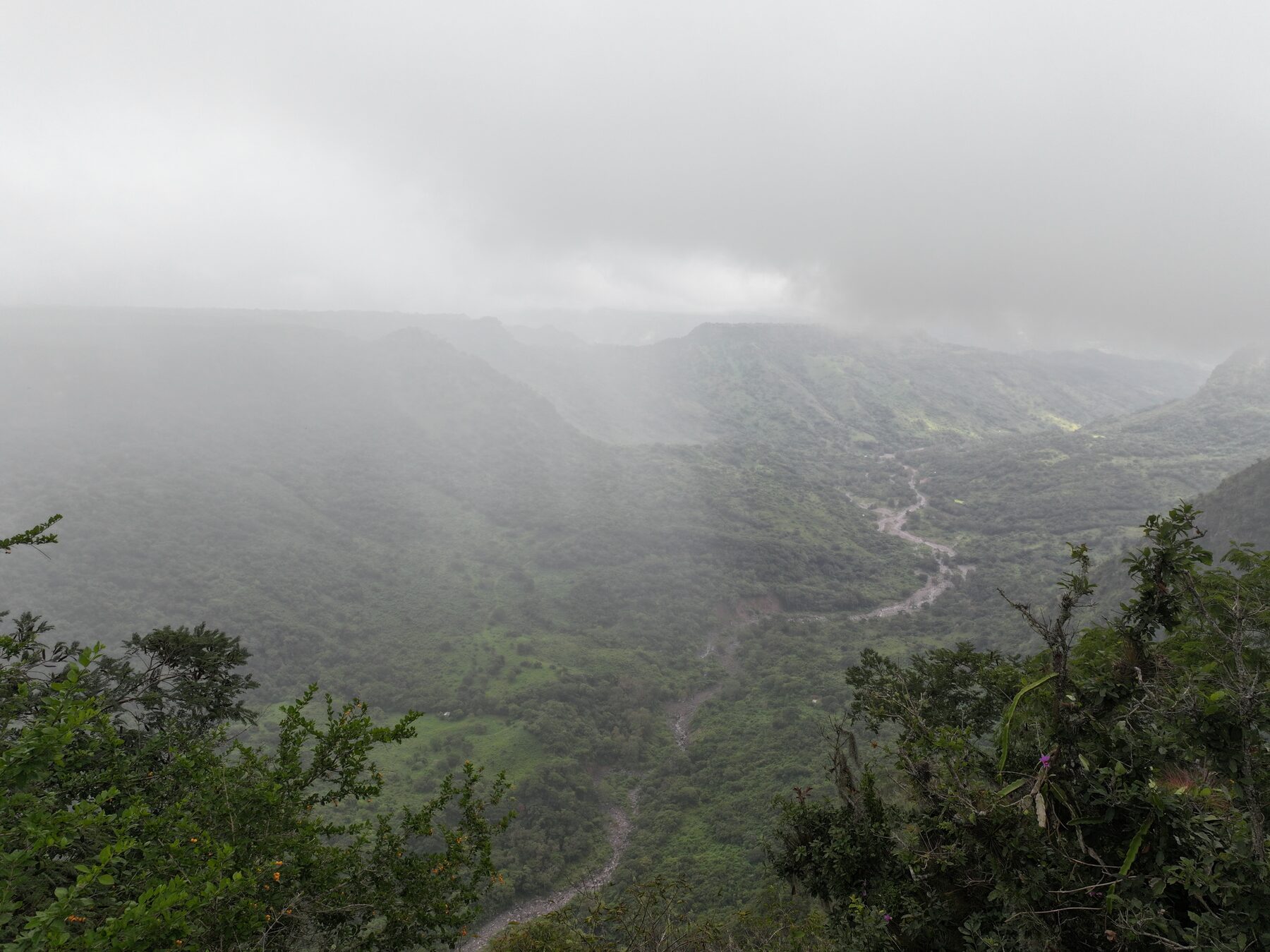
In the 1990s, our grandparents purchased a 14-hectare lot in the cloud-forest region of Ixhuacán de los Reyes, Veracruz. Much of it had already been converted to pasture, maize fields and cattle land, but its steep ravine, rocky outcrop and stream protected a remnant of living forest.
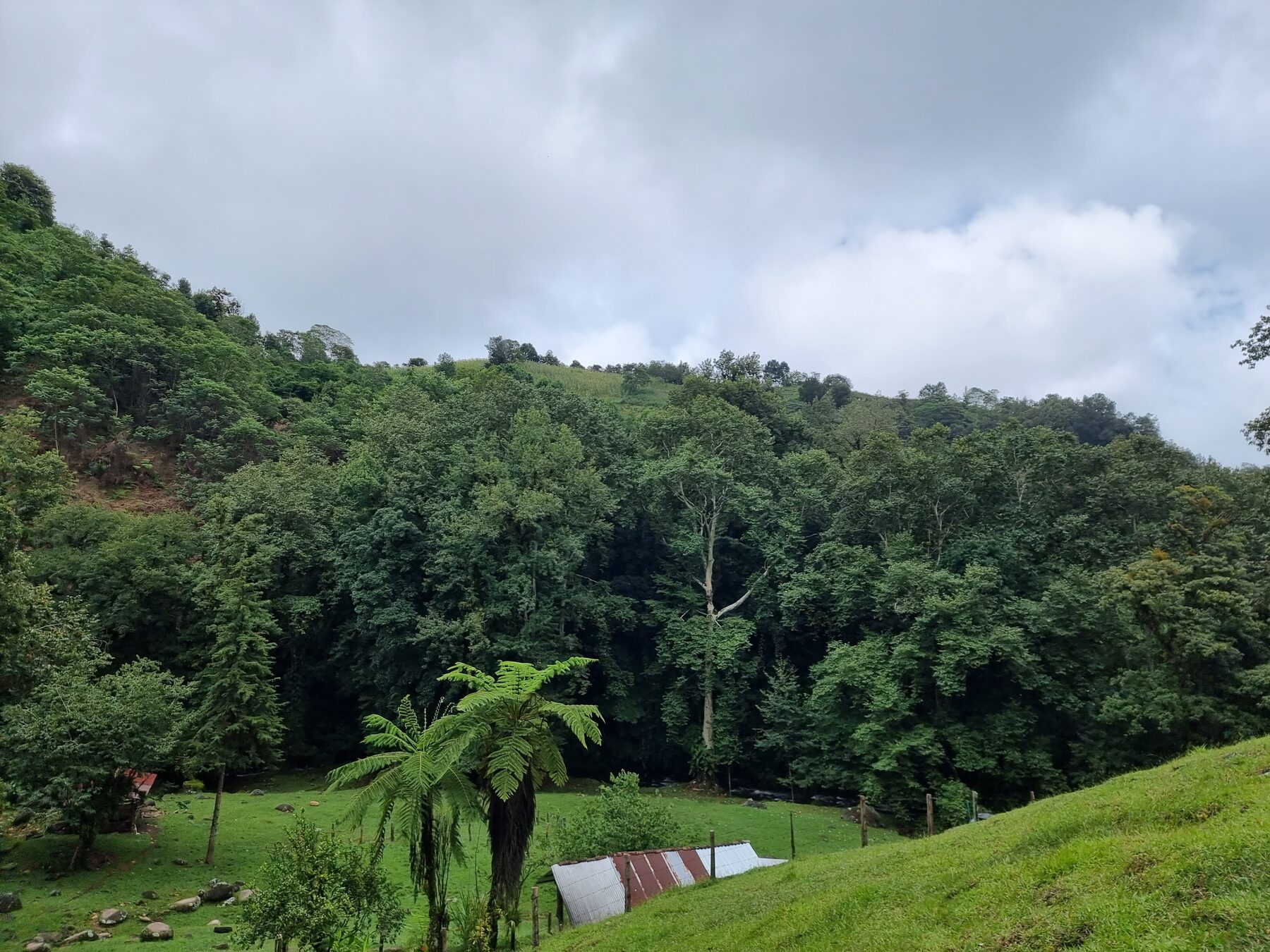
The reserve exists because some parts of the land were too inconvenient to farm.
By the time the land entered our family, most of the surrounding landscape had already followed the same agricultural pattern: trees removed, forest replaced with grass, maize and cattle.
This strategy removes nearly all biodiversity from a cloud-forest landscape. What makes this lot different is its terrain. Two hills, a small rocky outcrop and a stream meet in a hilly ravine, creating steep, wet and irregular areas that were never practical for intensive farming.
Inside this remnant, a few oaks, Platanus and Liquidambar trees remain. Their branches are draped with epiphytic orchids, bromeliads, aroids, mosses and other plants that depend on old trees, humidity and shade.
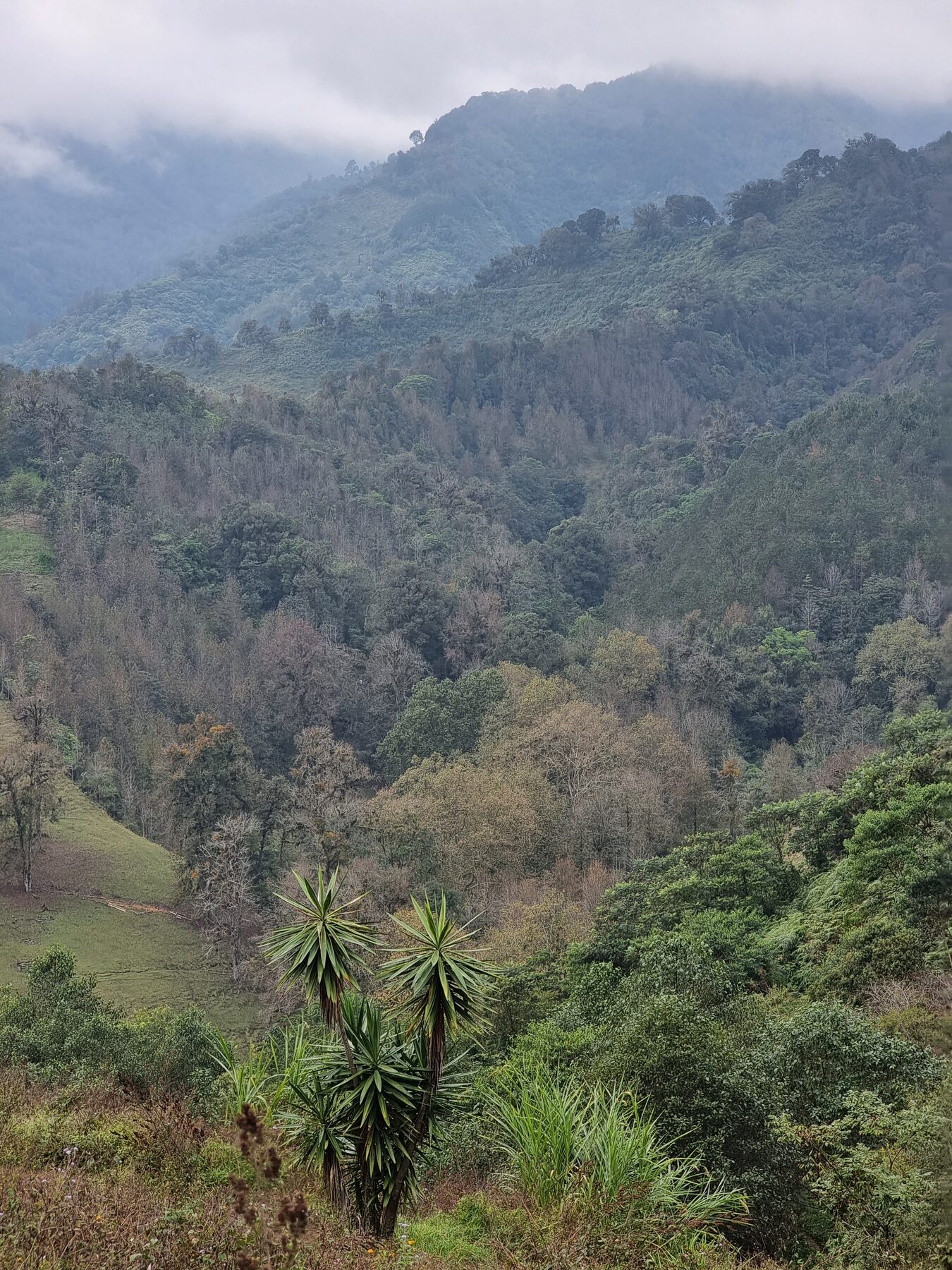
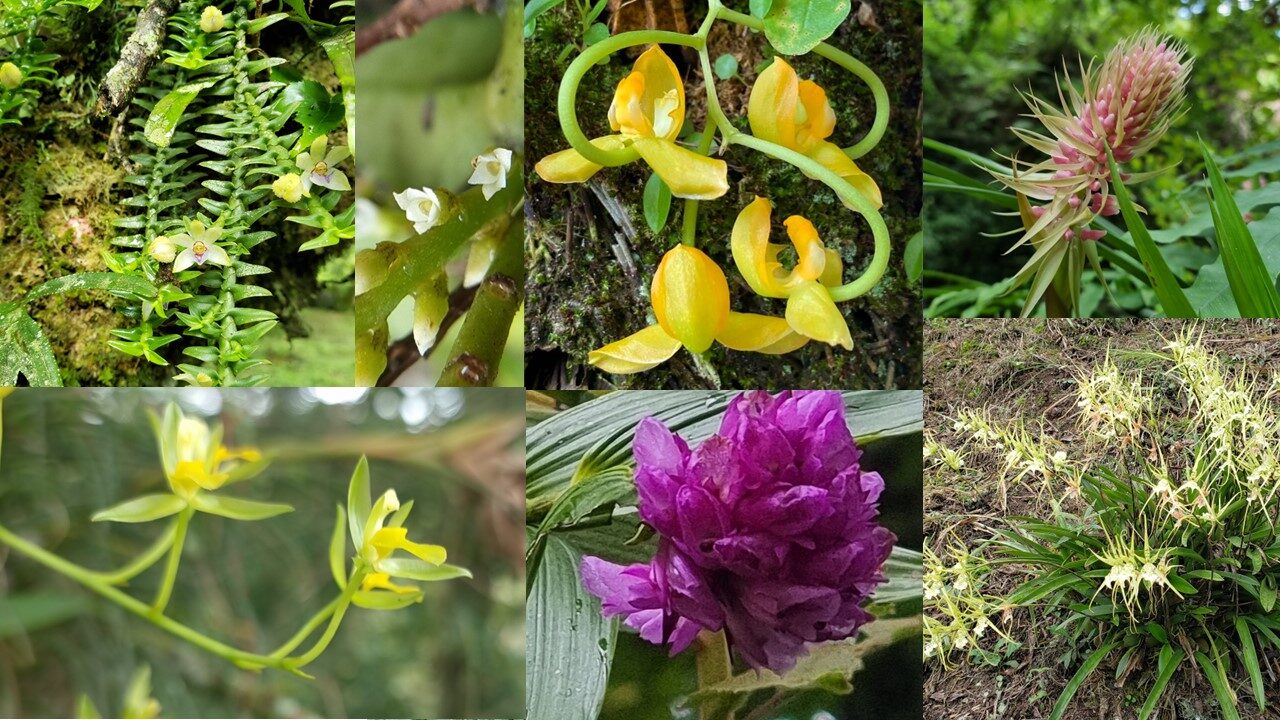
The remaining forest represents only about one fifth of the land, yet it holds roughly 50 orchid species.
A threatened cloud-forest orchid monitored in situ at the reserve, with mature individuals growing in the remaining canopy.
A protected epiphyte and one of the reserve's most important conservation species, linked to future propagation and reintroduction planning.
A cloud-forest orchid dependent on host trees, humidity and intact epiphyte habitat within the Veracruz mountain landscape.
The long-term goal is to expand forest structure, not only protect the surviving patch.
Orchidarc's goal is the gradual rewilding of the altered parts of the property with oaks, riparian trees and other native plants that support birds, orchids and the wider cloud-forest community.
Restoration here means rebuilding the living architecture that epiphytes require: host trees, bark surfaces, humidity corridors, canopy shade, streamside vegetation and seed-dispersing wildlife.
The reserve is also the first stop of Orchidarc's guided orchid tours. Visitors begin here because the site shows the full conservation problem in one place: agricultural simplification, accidental refugia, surviving forest and the possibility of ecological recovery.
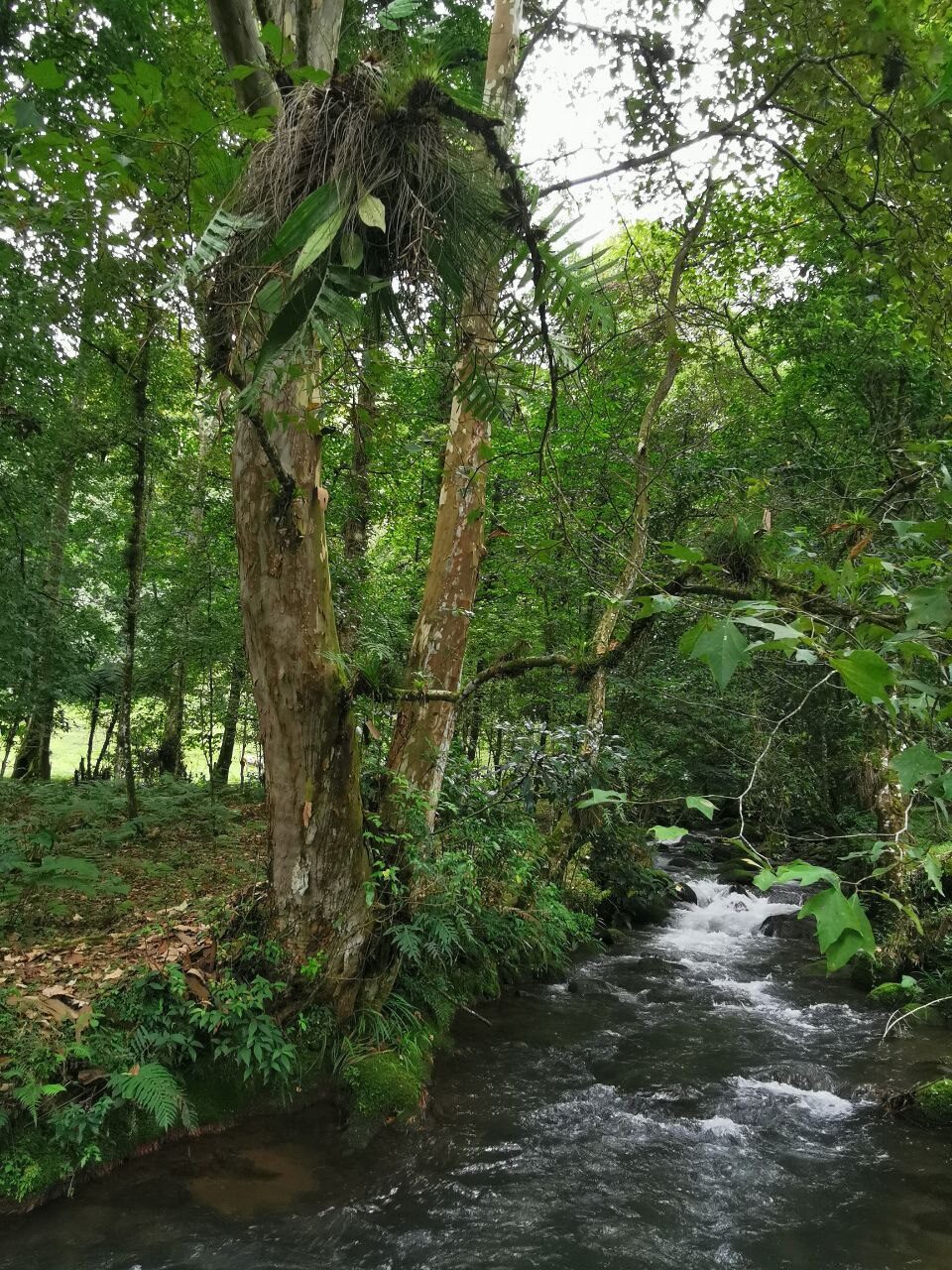
The surviving orchids are tied to the physical shape of the land: slope, rock, water and tree cover.
The Orchidarc Reserve is both a family conservation site and a field base for documenting, restoring and teaching cloud-forest orchid conservation. Its purpose is to protect the remnant, expand native tree cover and use guided visits to show why these landscapes matter.
Support the reserve Visit through orchid tours Explore species